


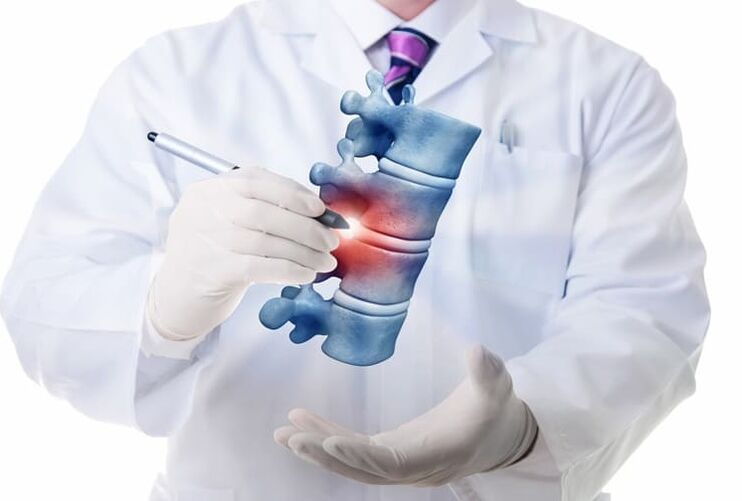
Osteochondrosis of the thoracic spine does not appear as often as osteochondrosis in other parts, but it is as young as other types of this disease.Today, it is diagnosed in young people as young as 20 years old, which is linked to both lifestyle and diet.
Thoracic osteochondrosis is the least common form of pathology, but the most dangerous of all types of osteochondrosis.The symptoms of thoracic osteochondrosis are so atypical that they can be associated with other diseases, for example, myocardial infarction or angina.
This disease is really full of threats, because after some time, if there is no proper treatment, osteochondrosis can trigger heart disorders, and the line between these conditions is very thin.
Symptoms of osteochondrosis
The thoracic spine is less mobile due to its anatomical features.Because of this, it is less loaded, which is why osteochondrosis appears here less often.When the first pathological changes appear in the thoracic region, the patient does not feel the signs of the disease for a long time, because it develops slowly.
Symptoms of osteochondrosis depend on the stage of development of the disease and are completely related to it.In the early stages, the symptoms are less obvious, while late osteochondrosis causes serious symptoms, for example, pain in the heart, increased heart rate.Manifestations of the disease are as follows:
- In the first stage of the development of the disease, discomfort during osteochondrosis occurs due to a violation of the integrity of the intervertebral disc.Fractures can be caused by sudden awkward movements or heavy loads in the area of the thoracic vertebrae.At these moments, patients experience increased sensitivity in this area of the spine, experience severe pain and muscle tension.The patient notes that the sensation is comparable to an electrical discharge passing through the back;
- the second stage of the disease is characterized by the protrusion of the intervertebral disc, which protrudes to a distance of up to 5 mm.The spinal column becomes unstable;diagnosis requires a comprehensive analysis of the patient's health status, because the patient constantly complains of discomfort and pain in the back of the chest, muscle tension, which can be symptoms of various pathologies;
- The third stage of thoracic osteochondrosis has more significant manifestations - the pain becomes more frequent, the patient experiences breathing problems (sudden shortness of breath, a feeling of lack of air), has a headache, and disturbances in the heart occur with osteochondrosis.
Important!The fourth stage of the disease is the most dangerous for the patient.Here osteophytes appear on the surface of the vertebrae, which compress the spinal cord and nerve endings.
At various stages of the disease, patients are plagued by the following pathological symptoms:
- intercostal neuralgia - a sharp pain in the sternum.At first, the pain point may be only in one place, but after some time the pain completely covers the person's chest.It becomes difficult for the patient to breathe and change the position of the body.If you try to bend, move, or get up from your seat, the painful sensation increases significantly;
- muscle spasms - the pain in the back muscles is quite strong, and the pain spreads to the lumbar region, and can even spread to the stomach and shoulders.Spasms are reflex in nature, that is, they themselves do not respond to pain, but respond to spastic contractions of other muscles;
- existing discomfort - it can have varying strength and appear long before the aggravation.Unpleasant sensations haunt the patient a few days or even a few weeks before the manifestation of more severe signs of osteochondrosis.Usually, discomfort appears only in the back and sternum and can disappear or worsen;
- with osteochondrosis, pathological symptoms are usually more pronounced at night.By morning, the patient feels satisfied, although in winter or with sudden movements, osteochondrosis appears again.
Atypical symptoms
Chondrosis is dangerous because the symptoms may not resemble back pain at all.And sometimes the patient does not suspect that the problem of the disorder lies precisely in the spine - they take painkillers or heart drugs, which have absolutely nothing to do with the cause of the pain.

If you have some symptoms, you need to go to the clinic for a professional consultation with a doctor - only after a comprehensive examination can you identify osteochondrosis or heart pathology
To suspect osteochondrosis, you need to know exactly what manifestations may indicate the disease:
- the occurrence of pain in the heart area, more similar to the symptoms of angina pectoris or even myocardial infarction.Such colic can last for weeks, and the drugs used to widen the coronary vessels have absolutely no positive effect on the condition;
- Aggravation of the disease can trigger women's pain in the mammary glands and pulling sensations, like during pregnancy.Therefore, if such sensations appear, you should definitely consult a mammologist;
- spastic pain in the upper abdomen, which some patients consider a symptom of gastritis, cholecystitis or pancreatitis.Pain usually increases with increased physical activity.Such pathological signs can seriously affect the functioning of the gastrointestinal tract;
- problems with bladder and genital function;
- pain in the pharynx and esophagus, foreign body sensation and pain when swallowing.
With osteochondrosis of the thoracic spine, Dorsago syndrome appears, which is characterized by the occurrence of severe pain in the sternum, which occurs when standing from a certain position - sitting or lying down.The unpleasant sensation behind the sternum is so strong that the patient has difficulty breathing, there are muscle spasms, pain when twisting the neck, in the lower back.
Dorsalgia develops slowly.At the initial stage, discomfort occurs only with active movement, and after a while it is felt constantly.At the peak of the disease, even a deep breath can trigger painful dorsalgia.
Symptoms of heart disease
Patients often confuse heart pain with manifestations of osteochondrosis, and this is not surprising, because with vertebral diseases, the discomfort in the sternum is so strong that the patient, out of fear, suspects the worst - a heart problem.To distinguish heart pain from osteochondrosis, you need to know the main characteristics of heart pain:
- localization - determining the correct localization will make it possible to partially eliminate doubts about chondrosis.Pain in the heart mostly occurs clearly behind the sternum or is localized in the left half of the sternum.It radiates between the shoulder blades, may radiate to the lower jaw, and is felt in the left hand;
- characteristics of pain - heart pain is distinguished by enviable firmness, it is compressive, pressing, it burns behind the sternum, and due to the sharp nature of its occurrence, such pain is called "dagger";
- provoking factor - usually pain in the heart has a clear factor, under the influence of increased pressure and discomfort occurs.This can be either physical activity or emotional stress factors, stress.During rest, when a person is relaxed and not nervous, pain in the heart area usually does not occur, but even with minimal pressure, which causes narrowing of the vessels, angina develops;
- time factor - heartaches don't last long, you can always determine the beginning and the end.As a rule, an angina attack occurs within a few minutes.The heart is not pierced first, does not hurt or pull.Usually it is the previous period of discomfort that makes it possible to distinguish osteochondrosis from real heart pain, the duration of the attack is mainly limited to 15-20 minutes;
- The nature of stopping chest pain is an important factor that doctors also take into account when distinguishing osteochondrosis from heart disease.Usually, a heart attack develops quickly, and the patient needs to stop the provoking factor - stop physical activity or calm down if there is stress.You can take nitroglycerin tablets, which in most cases help to get rid of the discomfort and also completely relieve the pain in a few minutes.In the case of myocardial infarction, nitroglycerin does not relieve pain and the patient needs emergency help.
Advice!These features are typical for heart pain, but angina pectoris can also cause shortness of breath and pain in the stomach.Therefore, the symptoms that arise must be analyzed in a complex way, taking into account the relationship and paying special attention to cardiac manifestations.
The problem with diagnosing heart pathology is not always possible for patients who do not have at least a general idea of how real heart pain manifests itself and what discomfort with osteochondrosis looks like, so doctors advise in critical situations not to delay the manifestation of pathology and always call an ambulance.
Osteochondrosis as a cause of heart disease
Pain behind the sternum can be a mere manifestation of osteochondrosis, a true heartache, but one should not forget the fact that osteochondrosis itself affects the heart.Doctors have been talking about the relationship of this disease with heart pain for a long time, but now scientific research has appeared confirming the mechanism of heart pain, the etiology of which is a problem of the musculoskeletal system, namely osteochondrosis of the thoracic region.
There is a nerve connection between the spinal cord and the heart that affects the function of the heart and triggers organ damage.The stellate ganglion takes an active part in the innervation of the heart, from which the vertebral nerves depart - part of the sympathetic plexus of the spinal arteries.
The sympathetic plexus indirectly affects the brainstem and cortex.Therefore, with osteochondrosis, nerve connections can trigger various cardiovascular pain syndromes, metabolic consequences that affect the contraction of the heart muscle, and the occurrence of arrhythmias.

Few people know that both diseases develop at the age of 40-50 years, and late diagnosis leads to combined symptoms, which creates mistakes
The difficulty of diagnosis is that patients suffering from osteochondrosis acquire this disease over forty to fifty years, and already at this age the first heart disorders begin to appear.Therefore, the diagnosis of osteochondrosis and coronary heart disease leads to frequent mistakes - it is difficult to determine the etiology of the pain.This happens for the following reasons:
- insufficient diagnosis of the cause of heart pain;
- limited knowledge of cardiologists about whether the heart can hurt with osteochondrosis;
- re-evaluation of the obtained ECG results, according to which the patient is almost immediately labeled with one or another diagnosis;
- the absence of x-rays showing obvious signs of osteochondrosis of the thoracic spine.
Also, during the diagnosis, the nature of the projected pain, its localization and the patient's sensations are not always taken into account.Therefore, the lack of diagnosis leads to the fact that about 80% of patients with osteochondrosis during the initial examination receive the wrong diagnosis - coronary heart disease.Although the ECG with high sharp T waves confirmed this diagnosis, but the doctor, without understanding whether it was the heart or osteochondrosis, gave priority to the first factor.
Only with additional examinations and X-rays can it be confirmed that pain in the heart with osteochondrosis is neurodystrophic rather than ischemic in nature.It is he who affects cardialgia, provokes characteristic manifestations and, as a result, errors in diagnosis.Research also notes that pain in the heart most often occurs in patients who already have organ pathology, in particular atherosclerotic changes in the vessels.
Important!The main threat in diagnosing such pain is the relationship between coronary and non-coronary components as the cause of chest discomfort.This aspect of the effect of osteochondrosis on the heart is very difficult to distinguish.
There is a study in which patients with coronary insufficiency and severe angiotic conditions were observed, who did not experience myocardial infarction during cardiospasm for a week, although the ECG data was quite threatening.However, the degree of severity favors the non-coronary component.
The main role of the doctor in this case is to correctly diagnose the disease, assess the patient's health status, especially indicators of heart function, and predict possible threats to the patient's life, because with the associated genesis - coronary and non-coronary - it is very difficult to identify the specific weight of each.According to statistics, in one hundred percent of cases, patients are admitted to the clinic for urgent treatment with a diagnosis of pre-infarction or myocardial infarction.
Relieves pain
After the cause is explained and the diagnosis is made, the doctor will prescribe treatment - a detailed treatment regimen will help the patient control the pain and prevent the development of complications.Therapy includes medications, physiotherapeutic treatment and homeopathy.The main methods of therapy are:
- Bed rest is recommended until the pain is completely gone;
- to eliminate heart pain, it is necessary to take analgesics, antispasmodics;patients will be recommended steroidal or non-steroidal anti-inflammatory drugs if osteochondrosis is detected, but they should not be abused because of their adverse effects on the gastrointestinal tract;
- In addition to oral medications, you can use a variety of pain-relieving creams, gels, and oils.Effective products with safe ingredients are medicines based on bee venom, turpentine, tea tree oil;
- to activate blood circulation, nootropic drugs, chondroprotectors, vasodilators and diuretic tablets will be useful;
- A very good effect on the body of a sick person is to undergo a course of physiotherapy.The prescribed technique will help to overcome both manifestations of osteochondrosis and will strengthen the body in case of heart pain;
- Acupressure on the spine with specific focus on the damaged tissue will help with back pain and muscle spasms.All areas experiencing spasms relax, pain is eliminated.At the same time, acupressure will help correct your posture;
- in the subacute period, physical therapy aimed at strengthening the muscles in the projections to the thoracic spine is allowed.You can visit the swimming pool, undergo special fitness training;
- Following a diet will help relieve pain - the doctor will separately recommend products for pathologies of the musculoskeletal system, and will also adjust the core nutrition, enriching it with substances necessary for the normal functioning of the heart muscle.Traditionally, for all patients, you need to pay attention to the consumption of fatty, sweet, salty foods, and if necessary, you need to lose excess weight.
The most important thing
Osteochondrosis of the thoracic spine refers to degenerative-dystrophic lesions of cartilage tissue, as a result of which a person experiences severe pain and discomfort.The disease develops mainly in patients over forty years of age;its appearance is influenced by joint pathology, traumatic injuries, hereditary factors, stress, metabolic disorders, poor working conditions, and hormonal imbalance.Osteochondrosis itself can cause pain similar to heart pain, and also indirectly affect the development of heart pathology.
To distinguish the pathology, a special diagnostic test is performed - novocaine blockade of the stellate ganglion, which helps to find out the patient's diagnosis and correctly assess his condition.In addition, it is also worth considering the radiating pain, the effectiveness or ineffectiveness of cardiac drugs, and the presence of changes in the ECG taken at different times.
Treatment is prescribed depending on the cause of the disease, which can be recognized after a thorough examination.Cardiac drugs are recommended for the treatment of IHD, while osteochondrosis can be treated with NSAIDs, steroid anti-inflammatory drugs, chondroprotectors, and in some cases surgical intervention is required.